
Ideas Delivered

Time to retire your woke badge and live your values
In August, when Democratic congresswoman Alexandria Ocasio-Cortez was asked by a prominent journalist to comment on certain positions her party’s progressive left wing had put forth in the past, not only did she make no effort to defend them. She laughed them off. Referencing a comment made by one of her allies about the days when stances like “defund the police” were at their zenith, she laughed, “Woke 1 was crazy.”
Her comment went viral within hours. Everybody, it seemed, had a strong opinion about what it meant—and virtually nobody agreed. Some commentators accused her of throwing her own base under the bus to make herself more electable. Others accused her of cynically distancing herself from Woke 1.0 without ever apologizing for what they saw as its damaging excesses, like cancel culture. Maryland’s governor, asked to weigh in by CNN’s Jake Tapper, admitted he wasn’t even sure what “Woke 1” meant. What was clear was that the comment signalled the official death of Woke 1.0. Then everyone pivoted and scrambled to try and figure out the contours of Woke 2.0.
I’m not interested in litigating whether “Woke 1.0” did or didn’t advance crazy ideas. I’m more interested in focusing on what AOC was actually doing in that moment, because whether she meant to or not, she was engaging in something we talk about a lot around here: rebranding.
A few months ago I wrote an Unpacked essay about how Canada was going through a brand refresh: after decades of defining itself by what it wasn’t, Canada was reclaiming its identity based on what it was. That article drew a lot of reaction, and the response got me thinking about whether anything else was ripe for a rebrand. I started thinking about certain words, and the word “woke” kept coming up, since it has been taking a beating lately. While “woke” policies have been aggressively dismantled in the U.S., and Canada’s vibe shift has been slower and quieter, Canadians, too, are suffering from woke fatigue.
“What AOC was actually doing in that moment was rebranding herself.”
What struck me most about that AOC moment was that she didn’t try to redefine the word “woke” for everyone, or offer a new, cleaner meaning. She simply distanced herself from it and moved on. If you’re weighing a run for higher office (which she didn’t rule out in that interview), and a word has become so radioactive that it has become a liability with the electorate you need, you don’t try to reclaim it—you pivot and rebrand away from it. What she was really signalling in that moment is that the word ‘woke’ now means something she no longer wants associated with her name, even if the values that underpin it haven’t changed at all.
So what does that story have to do with your brand’s? A lot, as it turns out. In the years since the word “woke” first entered the lexicon, its central tenets have quietly worked their way into brand strategy decks that have nothing to do with electoral politics. Businesses built them into their value statements. Purpose-driven organizations adopted DEI and EDIA language—and then folded it into their websites, marketing copy and hiring pages. The trouble started, in my view, when organizations adopted that language without ever examining what it actually meant for their own brand. Once that happened, it stopped being a value and started being a badge. The difference between those two is at the heart of what I want to talk about here.
A badge is decorative, something you wear: a line on your website, a virtue signal in your bio, a promise you make because, well, everyone else is making it. A value, on the other hand, is something you live: it shows up in who you hire, how you treat your lowest-paid employee, how you handle the conversation nobody wants to have. A badge is easy to take off the moment it becomes inconvenient, but values are structural. They’re woven into your organization’s DNA. And because of that, they don’t disappear the moment the word that encapsulates what they stand for falls out of fashion. If you slap a word onto a webpage as proof of your goodness, but it lacks ballast, you’re engaging in tokenism, and people are good at sniffing that out. Nothing alienates an audience faster, in fact, than the sense that they’re watching a performance rather than hearing a sincere belief.
“The trouble started when organizations adopted the language without examining what it meant for their brand.”
This disconnect started, I think, because a lot of the language businesses and purpose-driven organizations adopted filtered down from academia, where theoretical, abstract language is the lingua franca. But when organizations lifted those terms and dropped them from on high into their mission statements—without first translating them into a decision, policy, or day-to-day way of treating people that specifically reflected their organization’s values—they were just words on a page. And as long as those words remained undefined and untethered to their values, that left a vacuum for others to define them however they wished. And because those words were ubiquitous—and, in many cases, obviously performative—their audiences tuned out.
Words get co-opted because most organizations never do that hard work of connecting words and values. They adopt the language, skip the definition, and hope nobody asks. Then the word gets a bad rap or loses its currency because people get bored or just plain exhausted trying to figure out what it actually means—or has to do with them—and organizations scramble to distance themselves from it and jump on another trendy bandwagon. If you do the work of connecting the two, you won’t feel the need to drop certain language and run for cover the moment the winds shift. It will stand the test of time.
I saw the difference between those two extremes play out first-hand with a nonprofit client, CMHA Halton. A few years ago, their leadership team came to us wanting equity, diversity and inclusion to be more than a set of statements sitting alongside their brand strategy. They thought of DEI as a promise they were making to their clients and community, and they wanted that promise embedded within their organization, from the ground up. For them, a DEI policy wasn’t about policing language or adding a line to a values page. It was about defining, concretely, how their organization wanted to show up for the community it serves—which, for a mental health service, isn’t a theoretical abstraction. It’s the job. The initial push came from leadership, but staff reinforced it just as strongly, which is usually a good sign that a value is real rather than imposed. Their request, of course, delighted us because defining your values as an organization and then embedding them within every corner of it so that everything within and without touches them is core to what we stand for.
Since their initial research had prompted recognition that they had to better reflect the needs of an increasingly diversified community, they had already engaged a consultant to develop an EDIA strategy. I suggested that if EDIA was important to them, then rather than treating EDIA as a side activity, they should embed that policy into their strategic plan and values, and perhaps we should collaborate with her. We worked in tandem with their consultant across all aspects of our respective processes (interviewing of internal staff, clients and community partners, co-facilitating the all-staff strategy session, board sessions) and shared our results. CMHA Halton’s EDIA programming then organically reflected their brand values because they were clearly an extension of the strategy we built together.
“For a mental health service, defining how you want to show up for your community isn’t an abstraction. It’s the job.”
Which is why “what will Woke 2.0 look like?” isn’t really the pertinent question. Neither is “are we woke enough?” or “is it time to retire that word?”—or the badge we’ve been wearing to signify we’re on the team. The question to ask is, “what does the value behind a particular word or acronym actually mean to our brand—specifically, concretely, and in a way we could easily point to if we threw away that badge?” If equity matters to your organization, what does it look like in a performance review? If community matters, what does it look like when a decision is unpopular? If sustainability matters, what does it look like when it costs you money? And, above all, would it still mean the same thing if those words or acronyms went away tomorrow?
Field Notes
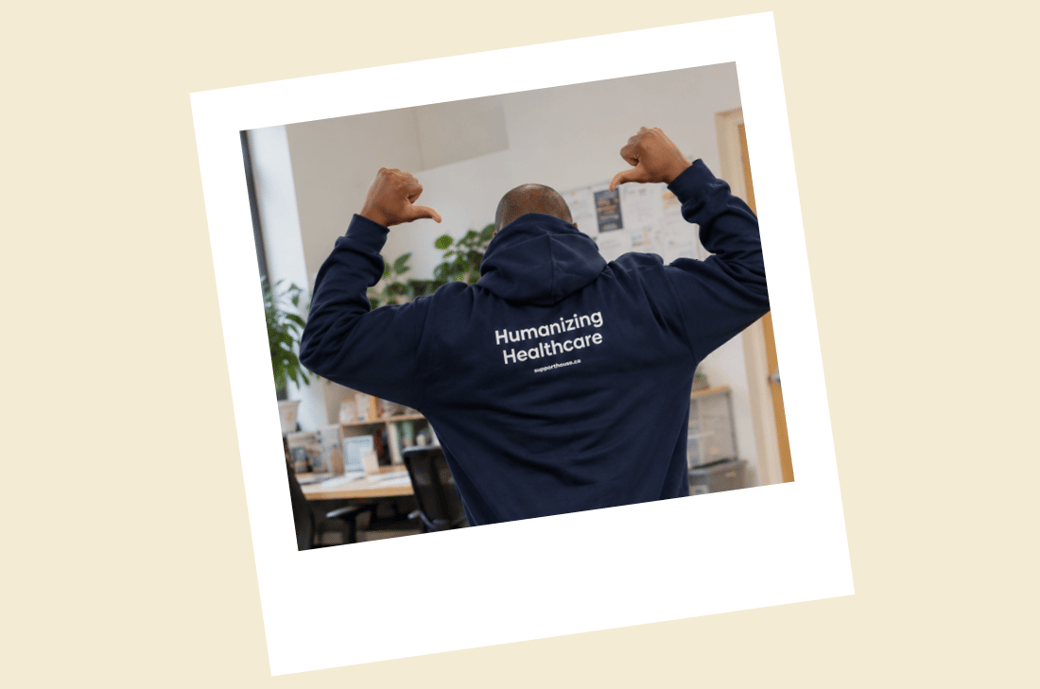
We’ve written before in this newsletter about Key Purpose Indicators, and how speaking your values isn’t sufficient. They only have meaning once you can measure them. This month, we had the chance to observe that idea in action.
Support House, a community health centre, has grown 44% in three years. That’s an incredible jump for any organization, let alone a nonprofit, and its spectacular growth prompted us to revisit the values that had helped drive it.
As a team, we defined Support House’s values as the rights it champions: We Show Up because everyone has the right to connection, respect and dignity. We Break Barriers because everyone has the right to equitable access to care. We Amplify Voices because everyone has the right to direct their own care.
To ensure everyone on the team understands and absorbs these values day-to-day, we worked with the leadership team to define what living them actually looks like in practice. We decided that if we defined and built each one out as an “Oath,” it wouldn’t simply be read once during orientation. It would become a commitment that individuals make—and for which they’d be held accountable.
What makes Support House’s Oath a KPI instead of simply a poster is how the organization turns it into an active resource that shows up in the people they hire, how they’re onboarded, and how they’re reviewed once they’re in the role. Those values are embedded via conversations with their supervisors, feedback from their service users, team huddles, and what they learn from one another about how to improve their work through communities of practice.
We Show Up, We Break Barriers and We Amplify Voices constitute the collective promise that Support House makes publicly, but each person actually signs their promise in the first person. The pronoun shift is deliberate: By pledging their commitment using “I,” and not “We,” they are making a pledge to reinforce their individual accountability alongside the team’s.
During the recruitment process, they’re asked if their thinking already aligns with the idea of personal accountability. During onboarding, they’re presented with a clear set of expectations to meet, ones that others can refer back to, not simply nod along with. And during performance conversations, they refer to their Oath in the first person, because everyone already knows what “I show up” means in practice.
What Support House has figured out and implemented—to their community’s great benefit—is that there’s a big difference between a values statement and a set of expectations that every team member is required to measure themselves against. The former expresses an aspiration for who the organization wants to be. The latter takes that idea and transforms it into a concrete plan to embed the values that idea represents throughout the organization and influences how it actually runs.
So if 44% growth in three years sounds like a pipe dream for your organization, maybe it’s time to take those KPIs off the shelf, dust them off, and figure out how to put them to work for your community.
The Scroll

Today’s issue of Unpacked was brought to you by Erin “Wide Awake” Brand.
Was Unpacked forwarded to you? Sign up here.
Working on something inspiring?
We’ve got a whole library of insights and brand-building resources.


Parcel Design, 536 Eastern Ave, Toronto, ON M4M 1C7, Canada